

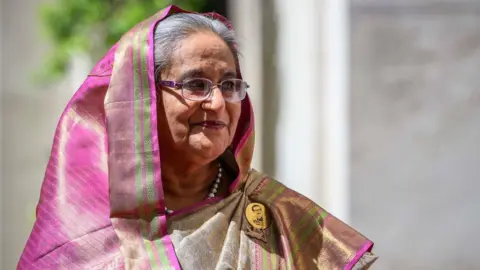
The country's previous leader has been sentenced to death for human rights violations stemming from her severe measures on student-led protests which resulted in her removal from power.
Sheikh Hasina was found guilty of authorizing deadly measures to be used against activists, among whom around 1,400 people were killed during the disturbances during 2024.
Hasina was tried without her presence by the International Crimes Court in Bangladesh, as she resides in exile in India since she was forced from power in July 2024.
Prosecutors accused her of being behind hundreds of killings during the protests. She has refuted all charges, labeling the proceedings as "prejudiced and driven by politics".
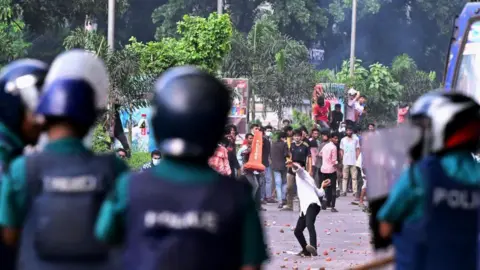
The verdict marks a critical juncture for Bangladesh, as the protests brought forth resentment over extended periods of oppression. Families of those killed and wounded had requested severe punishments.
Answering the judgment in a detailed document, the former leader stated the capital punishment was the interim government's way of "eradicating the Awami League" as a electoral entity and that she was proud of her administration's performance on individual freedoms.
"I have no trepidation to face my accusers in a fair court where the evidence can be weighed and tested fairly."
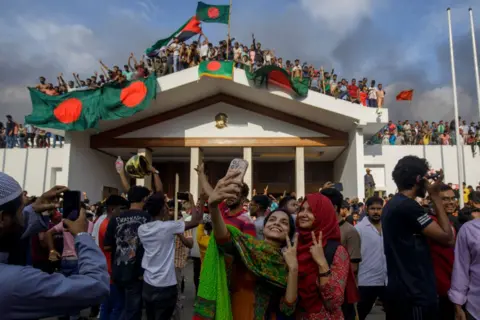
Bangladesh's main city, Dhaka, where the court convened, was under enhanced protection before the ruling on Monday, with several of her detractors organizing a demonstration and celebrating as the judgment was announced.
The capital witnessed a recent spike in turmoil, with multiple explosives detonated and public transport vehicles burned in the time before the verdict.
One explosive incident was recorded in Dhaka on Monday morning, with no casualties reported, local police official the police spokesperson told news organizations.
The student-led uprising during 2024 began with requests to remove state employment quotas but morphed into a wider anti-government movement.
International human rights monitors stated in a document in February that the approximately 1,400 deaths could represent "crimes against humanity".
The report documented the gunfire from minimal distance of a number of activists, the purposeful disabling of further participants, unwarranted detentions and torture.
Leaked audio of a call made by the former leader authenticated by external reviews in previous months indicated she had sanctioned the use of "deadly arms" in July 2024. The recording was presented in court during the trial.
Prior to the ruling, relatives of those killed during the protests informed news agencies they wanted the former leader to face strict penalties.
One relative, whose brother was shot dead in July 2024, said he wanted "exemplary punishment" for the former leader and associates who have "engaged in retaliatory actions and exploited their positions".
Another relative, whose spouse died near Dhaka in August 2024, said she wanted her penalty to be "implemented before the election".
"Solely at that point the kin of victims [in the protests] will obtain solace in their minds."
After her departure, an temporary leadership headed by economist Muhammad Yunus has taken charge. A general election is set for February 2026.
However, the Awami League, the former ruling party, was banned by Bangladesh's interim government in May.
Hasina warned in the previous month that if the the League's representatives were barred from participating in the forthcoming vote, numerous would avoid the election.
This decision presents a diplomatic challenge for the neighboring countries. Dhaka has formally requested her return but to date India has expressed no readiness to comply.
The legal representative assigned to her Mohammad Amir Hossain said he was "unhappy and desiring the decision had been otherwise".
"I even cannot appeal because my clients are absent; for that reason I am disheartened," he continued.
The previous week, Hasina's lawyers said they had submitted an immediate petition to the UN raising major judicial fairness and judicial process problems at the ICT.
The former leader faced trial in conjunction with her previous domestic affairs official and security forces head.
While the sentence provides certain resolution to kin of victims in the protests, it may have minimal effect on calming the state's ideological splits.
"The anger against Sheikh Hasina and the her political party has not subsided," a human rights advocate from the capital informed news organizations. "Both she and the organization has apologised or displayed repentance for the fatalities of countless citizens."
She said "It makes it difficult for the organization to receive endorsement by a most citizens in this state."
The advocate continued that the sentence was not finality for the kin of those who died and were wounded.
"We work with multiple individuals who lost their limbs forever, they are amputees now, as a result of the harsh measures. They cannot pardon her."
An analyst, a journalist and a long-time Bangladesh watcher, said the "fundamental aspect of the condemnation could make it increasingly challenging" for Awami League to become a normal feature of Bangladeshi politics again.
This may change if "a form of contrition emerges and a distancing from Sheikh Hasina and the old leadership," he expressed.


